Small Business Website Design: 7 Essentials to Attract Visitors and Generate Leads
What makes a business website trustworthy and effective at generating leads? Explore the essentials of website design for small businesses, including speed, cybersecurity, SEO, page structure and conversion, plus when to redesign an existing website.
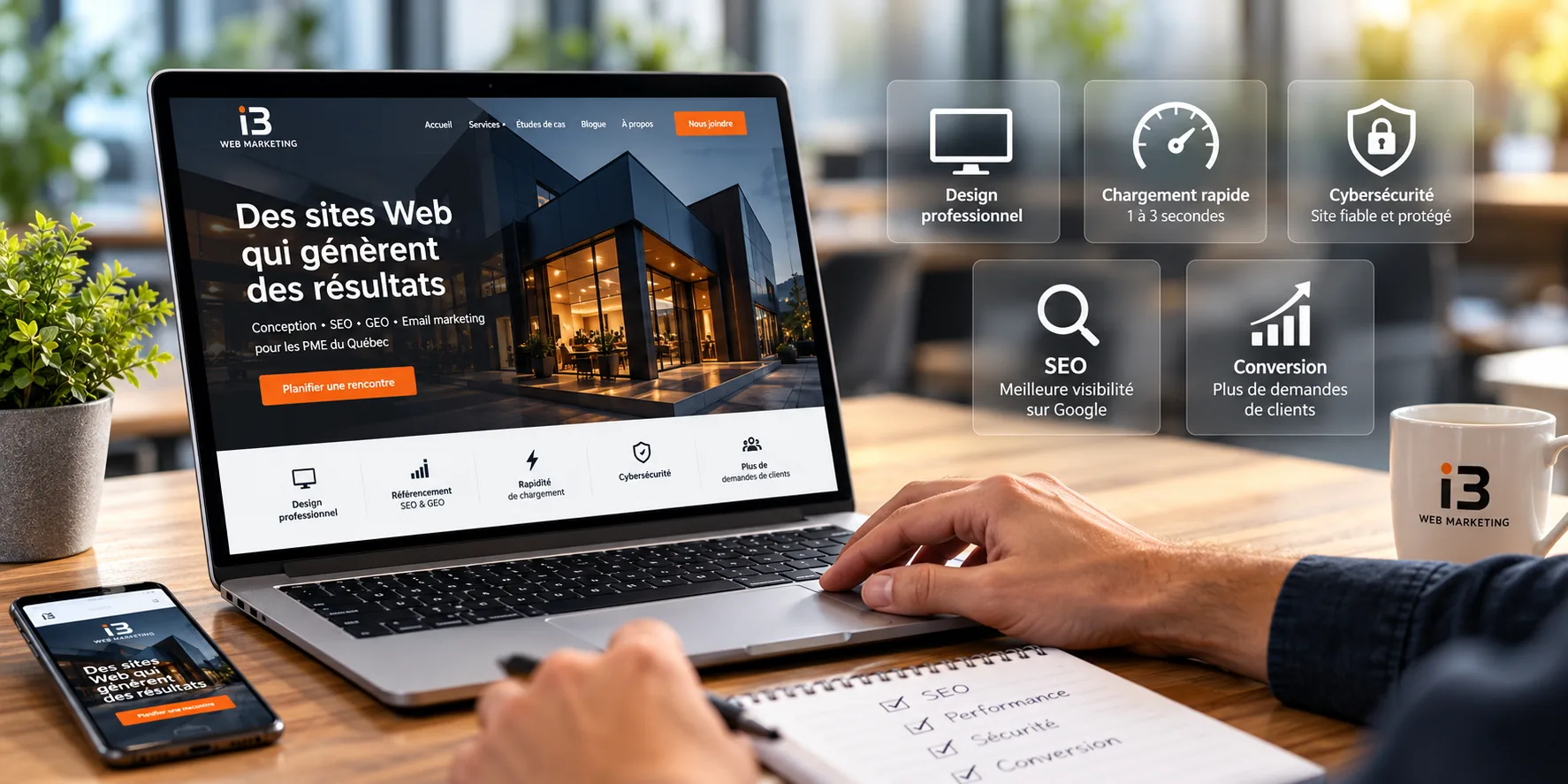
For a small or medium-sized business, a website is much more than an online brochure. It is often the first interaction a potential customer has with the company.
Before contacting you, visitors may review your services, compare competitors and decide whether your business appears credible.
An attractive website alone is no longer enough. Customers must be able to find it through search engines, pages must load quickly, information must be easy to understand and visitors need a clear way to take the next step.
Effective small business website design brings together trust, performance, security, search engine optimization and conversion.
Here are seven essentials to consider when building a new business website or deciding whether an existing one needs improvement.
1. Build Trust From the First Visit
When potential customers visit your website, they should quickly understand who you are, what you offer and why they should consider your company.
A professional design, clear service descriptions, authentic photography and accessible contact information all contribute to building trust.
Customer testimonials, completed projects and relevant case studies can reinforce credibility when they accurately reflect your work.
For small businesses, a neglected website can create the wrong impression. Outdated information, confusing navigation or poor mobile usability may cause visitors to question the company's professionalism.
Your website should reflect the quality of your business and make it easy for potential customers to feel confident about contacting you.
2. Website Speed and Security Are Essential
A slow website can lose potential customers before they even explore your services.
Businesses should aim for a fast, responsive experience, ideally allowing visitors to access meaningful page content within approximately one to three seconds under suitable conditions.
Google's Core Web Vitals provide useful performance benchmarks. One important metric, Largest Contentful Paint (LCP), measures when the main visible content appears. Google recommends an LCP of 2.5 seconds or less for a good user experience.
Website performance depends on factors such as image optimization, hosting quality, efficient code and unnecessary scripts.
Security matters just as much. HTTPS encryption, software updates, backups, protected administrative accounts and secure contact forms help reduce exposure to common risks.
Fast, secure websites support customer confidence while providing a better overall experience.
3. Search Engine Optimization Helps Customers Find Your Business
Even an impressive website has limited business value if potential customers cannot find it.
Search engine optimization, or SEO, helps improve a company's visibility in relevant Google search results.
For small businesses, an effective SEO strategy starts with understanding how customers actually search for their products and services.
A construction contractor, manufacturer and professional services firm will attract different search queries. Their website content should reflect those differences rather than rely on generic keywords.
Website structure is also important. Clear navigation, dedicated service pages, descriptive headings, useful content and relevant internal links help search engines understand what the business offers.
Local SEO can support visibility in the communities and regions a company serves.
SEO does not guarantee top rankings. However, a well-planned approach can improve search visibility over time and attract visitors who are actively looking for relevant services.
4. Turn Website Visitors Into Qualified Leads
Attracting website visitors is only the first step. Encouraging them to contact your business is what turns traffic into potential opportunities.
This process is known as website conversion.
An effective website should guide visitors toward a relevant next action, such as requesting a quote, scheduling a consultation, calling the company or submitting an inquiry.
Clear calls to action are essential. A button labelled “Request a Quote” often communicates more value than a vague “Learn More” when a visitor is ready to move forward.
Navigation should remain straightforward, and important information should be easy to locate.
Short contact forms, clickable phone numbers and service pages that answer common questions can reduce friction.
Good conversion-focused website design makes it easier for interested visitors to become qualified leads.
5. When Should You Redesign Your Business Website?
A business website does not automatically need replacing because it is several years old.
The more important question is whether it still supports your business goals and meets customer expectations.
If your website performs poorly on mobile devices, loads slowly, has limited Google visibility, is difficult to update or generates few inquiries, it may be time to consider improvements.
Sometimes targeted optimization is enough. In other cases, a complete website redesign offers a better foundation for future growth.
Before investing, evaluate these seven essentials:
- Professional design that builds trust.
- Mobile-friendly navigation and usability.
- Fast page loading and technical performance.
- Appropriate website security measures.
- An SEO structure based on customer search behaviour.
- Clear, informative and persuasive service pages.
- Effective calls to action that encourage inquiries.
At I3 Web Marketing, we approach website development as a business investment. Our focus is on helping small and medium-sized companies strengthen their online visibility, credibility and lead generation.
A successful business website should be easy to find, easy to use and designed to support business growth.